
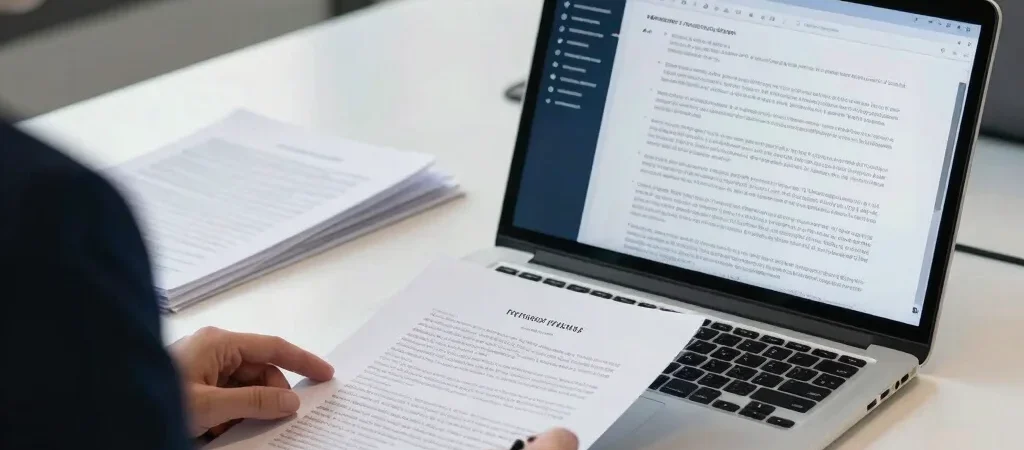
A lawyer opens an AI-generated summary of a contract and finds a confident answer, but no clear route back to the clause that supports it. That is not just a software problem: it is a review problem, a recordkeeping problem, and potentially a client-risk problem. Legal AI is most useful when the work remains verifiable after the first draft.
Keep the source within reach
For a French legal department or law firm, a tool that handles French-language documents still needs to preserve the original text, document version, and relevant passage behind each material summary or suggested clause. If a reviewer cannot quickly compare the output with its source, speed at the drafting stage may turn into extra work later. The test is simple: can another professional retrace how the answer was produced?
Put review into the workflow
Human review should be a defined step, not a general disclaimer attached to a tool. Teams can set different checks for a routine clause comparison and a high-impact advice note, while recording who approved changes before a document leaves the organization. This makes accountability visible without pretending that every task carries the same level of risk.
Set rules before procurement
Before a pilot, agree which documents may be processed, who can access prompts and outputs, and how long those records are retained. Ask the provider specific questions about data handling and whether submitted material may be used to improve a service; then have the relevant legal, security, and procurement teams assess the answers. A useful pilot measures not only drafting time, but also correction rates and whether reviewers can reproduce the reasoning.